HKS SUPER OIL Premium: The Story Behind the Legendary Colors
Did you know that HKS's iconic racing colors trace their origins to SUPER OIL packaging? Discover how this distinctive design became part of the legendary Skyline GT-R No. 87, which claimed a historic Group A victory in 1993. Explore the journey of HKS engine oil from its beginnings in 1985 to the evolution of SUPER OIL Premium for modern engines.
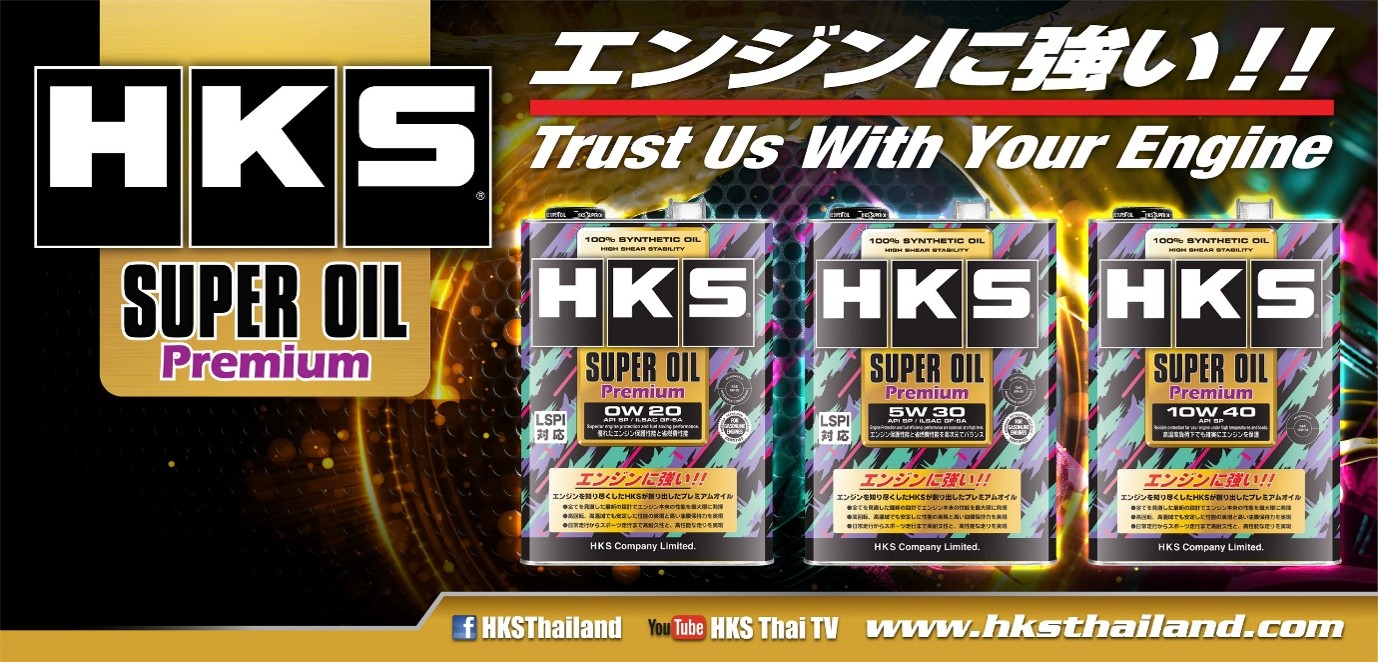
HKS SUPER OIL Premium
More Than Just Colors: A Legacy Written in Motorsport History
From the belief that engine oil is an essential part of the engine, to the legendary livery of the HKS Skyline GT-R and the evolution of engine oil for modern vehicles.
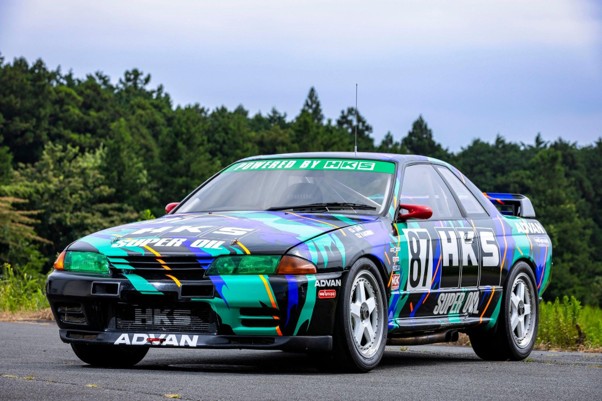
If you are passionate about Japanese performance cars, chances are you have seen the iconic black HKS race car, decorated with striking purple, green, and vibrant graphics, proudly displaying the unmistakable HKS logo.
For decades, this distinctive color scheme has appeared on HKS race cars, show cars, and products, becoming one of the brand's most recognizable visual identities. Even a brief glimpse is often enough for enthusiasts to identify it.
But have you ever wondered where these colors originally came from?
The answer might surprise you.
One of the most important origins of this legendary design was not a race car, an aerodynamic body kit, or a graphic created specifically to stand out on the racetrack.
Its story is connected to something far more ordinary.
A can of engine oil.
To understand how engine oil became such an important part of HKS history, we need to travel back more than 50 years to Japan.
1973 — The Beginning of a Belief That Engines Could Achieve More
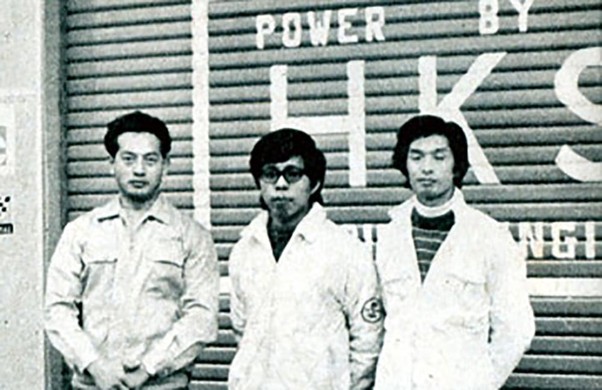
In October 1973, HKS was founded in Fujinomiya, Shizuoka Prefecture, Japan, by Hiroyuki Hasegawa.
The company did not begin simply as an ordinary automotive aftermarket parts supplier. It was established through a determination to develop racing engines and high-performance automotive components.
At the time, Japan's automotive industry was expanding rapidly. Manufacturers were increasingly focused on efficiency, reliability, and emerging technologies.
HKS, however, was pursuing another question.
How much more performance could be achieved from an engine that had already been engineered and built?
In 1974, HKS began selling automotive turbocharger kits, marking an important milestone in its development and the beginning of its growing reputation in the world of automotive performance.
But increasing engine output inevitably brings additional challenges.
As power increases, internal engine components may be subjected to greater operating demands, including higher temperatures, friction, and mechanical forces acting on rapidly moving parts.
Performance engineering, therefore, cannot focus solely on horsepower figures.
It must also consider how an engine can continue operating under increasingly demanding conditions.
This understanding eventually led HKS toward another essential element of engine development.
1985 — Why Did HKS Decide to Develop Its Own Engine Oil?
For many drivers, engine oil is simply something that needs to be replaced at regular service intervals.
For engine developers, however, its importance goes much further.
Inside an engine, numerous components continuously move under considerable mechanical loads. Pistons, crankshafts, bearings, and valvetrain components all depend on appropriate lubrication to manage friction and reduce wear.
When engines operate under demanding conditions, the properties of engine oil become even more critical.
Oil-film retention, stability across varying temperatures, and viscosity suited to the engine's operating requirements all play essential roles in maintaining effective lubrication.
This led HKS to a distinctive engineering philosophy:
Engine oil should be considered an integral component of the engine itself.
That philosophy became the foundation of HKS engine oil development.
In 1985, HKS introduced its first original engine oil.
This was more than simply adding another product category to the company's catalog.
It represented the expansion of HKS engineering expertise into the field of lubrication.
For HKS, developing engines capable of producing greater performance and ensuring those engines receive appropriate lubrication were not separate objectives.
They were closely connected aspects of the same engineering challenge.
However, the story of HKS engine oil had not yet become widely recognized.
That would begin to change in the early 1990s, during one of the most exciting periods in Japanese automotive and motorsport history.
1992 — The Birth of HKS SUPER OIL
In 1992, HKS established a clearer identity for its engine oil products, which had previously been marketed under another brand name, by introducing the HKS SUPER OIL name.
This marked an important turning point.
Engine oil was no longer simply another product associated with HKS engineering. It had become an identifiable part of the HKS brand itself.
The SUPER OIL name began appearing alongside the company's other high-performance products, reflecting the importance HKS placed on lubricants as a component of engine technology.
At approximately the same time, HKS was taking on another major challenge.
Group A touring car racing.
During the early 1990s, Group A represented one of Japan's highest levels of touring car competition.
The racing field was filled with Nissan Skyline GT-R (R32) machines, many supported by experienced teams with extensive engineering resources.
Competition was intense, demanding excellence in vehicle preparation, mechanical engineering, and driver performance.
HKS brought its expertise in engine development to this challenging environment, entering competition with its own Skyline GT-R during the 1992–1993 period.
But what would eventually make this racing machine so memorable was not limited to its engine or its racing results.
Across its bodywork, another chapter of HKS history was being written.
1993 — When the Colors of an Engine Oil Can Became the Colors of Victory
Imagine a Japanese touring car race in the early 1990s.
The starting grid is filled with Nissan Skyline GT-R race cars, many representing well-established teams backed by major automotive manufacturers.
Among them stands the HKS Skyline GT-R, carrying race number 87.
Unlike an ordinary road car with a simple paint finish, this machine features a dramatic black base highlighted by green, purple, and vivid graphic streaks sweeping across its bodywork.
Prominently displayed are the HKS logo and the words SUPER OIL.
Its appearance is so distinctive that the car can be recognized almost instantly, even without reading the team name.
But the most fascinating detail lies in the origins of those graphics.
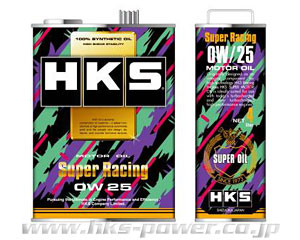
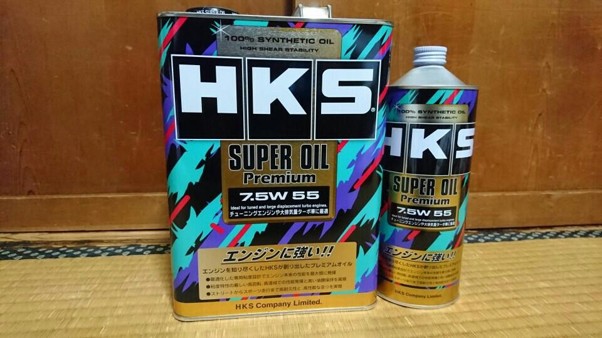
The colors and patterns used on the HKS Skyline GT-R were inspired by the packaging of HKS SUPER OIL that already existed at the time.
A design originally seen on an engine oil container had made its way onto a racing machine competing in one of Japan's most demanding motorsport categories.
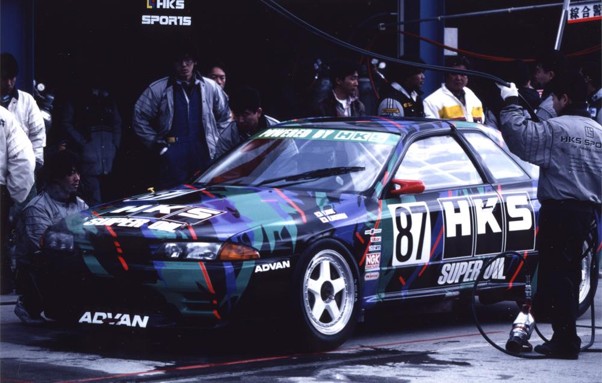
And in 1993, the HKS Skyline GT-R number 87 achieved one of the team's most significant racing accomplishments.
At Sportsland SUGO in Japan, HKS claimed victory in Group A competition during its second year of participation.
It was a defining moment.
The race car wearing graphics inspired by an engine oil can was no longer merely displaying a recognizable promotional design.
It had carried HKS to victory in top-level Japanese touring car racing.
What began as graphics on SUPER OIL packaging had become part of a celebrated moment in HKS motorsport history.
And that gave the SUPER OIL story a meaning far beyond the product name itself.
It was not the colors that made the car faster.
It was not the artwork on an oil container that produced the victory.
Instead, an engine oil product developed from HKS's belief in performance engineering had become part of the visual identity of a racing machine that made history for the brand.
The race car helped enthusiasts remember the SUPER OIL graphics.
And those graphics, in turn, helped enthusiasts remember the race car for decades to come.
The connection between HKS products and motorsport was no longer confined to catalogs and promotional materials.
It had become a genuine part of the brand's history, supported by an achievement that could be remembered and recognized.
From Oil Colors to a Timeless Brand Identity
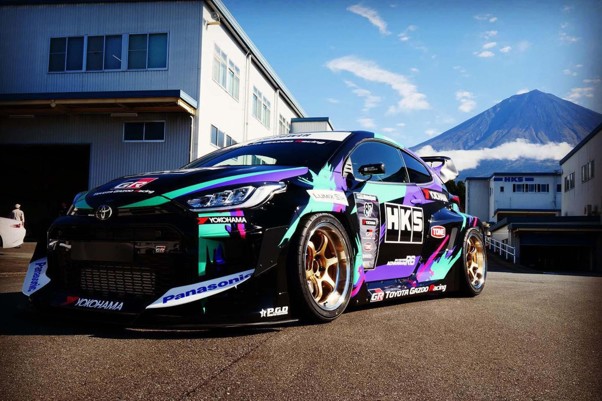
The black, purple, green, and vibrant graphics once seen on the HKS Skyline GT-R became associated with what enthusiasts recognize as HKS Oil Color or Oil Splash styling.
These distinctive visual elements continued to appear on HKS products, show cars, and performance projects throughout subsequent generations.
Although the design evolved to reflect changing trends, its bold contrasting colors continued to connect modern HKS creations with the brand's motorsport heritage.
One example is the HKS Racing Performer GR Yaris, which brings elements of this recognizable identity to a modern high-performance vehicle.
Place an image of the 1993 HKS Skyline GT-R alongside the HKS Racing Performer GR Yaris, and the differences in automotive technology and design between the two eras become immediately apparent.
Yet something remains remarkably consistent.
The unmistakable HKS identity expressed through its colors.
This continuity is what gives the design its significance.
It is not merely a sporty graphic treatment intended to attract attention.
It carries a history and has been used consistently enough to become instantly recognizable among HKS enthusiasts.
However, there is no clearly established official explanation assigning a specific meaning to each individual color.
It would therefore be misleading to claim that one color represents horsepower, another represents speed, or another represents a particular technology.
The true value of the design lies in its documented connection between engine oil packaging and HKS motorsport history, rather than symbolic meanings assigned to individual colors.
As Engines Evolved, SUPER OIL Had to Evolve With Them
Although SUPER OIL originated from HKS's experience in high-performance engine development, the automotive industry did not remain in the era of the Skyline GT-R.
As the industry entered the 2000s, engine technology continued to evolve.
Manufacturers introduced increasingly sophisticated engine management systems, new performance-oriented engine families, and different lubrication requirements.
In response, HKS developed engine oils with characteristics optimized for specific engine applications.
These products reflected the importance of balancing viscosity, oil-film retention, and operating performance according to the requirements of individual engines.
Later, as turbocharging and direct fuel injection became more widespread in modern gasoline engines, lubricants faced additional technical demands.
Engine oil formulations increasingly needed to address engine protection, deposit control, and the risk of Low-Speed Pre-Ignition (LSPI) — an abnormal combustion phenomenon associated with certain turbocharged direct-injection engines.
Choosing the right engine oil could no longer be simplified to selecting the highest viscosity or the most expensive product.
The appropriate lubricant had to match the engine's operating requirements and the specifications established by its manufacturer.
This changing automotive landscape provides the context for the next chapter of the SUPER OIL story.
The arrival of HKS SUPER OIL Premium.
HKS SUPER OIL Premium — From Performance Heritage to Everyday Driving
In January 2021, HKS introduced SUPER OIL Premium products meeting the API SP specification for gasoline engines, with revised formulations designed to address the requirements of modern engine technology.
The development approach was not simply to increase oil viscosity in pursuit of a stronger lubricating film.
Instead, the focus was on achieving a balance among essential lubrication properties.
HKS highlighted improvements in base oil quality and the appropriate selection of viscosity index improvers, aiming to maintain lubrication performance under high-temperature conditions while preserving suitable characteristics at lower temperatures.
This approach meant that SUPER OIL Premium was not intended exclusively for highly modified racing-oriented vehicles.
It could also serve everyday vehicles requiring high-quality synthetic engine oil that meets the applicable engine specifications.
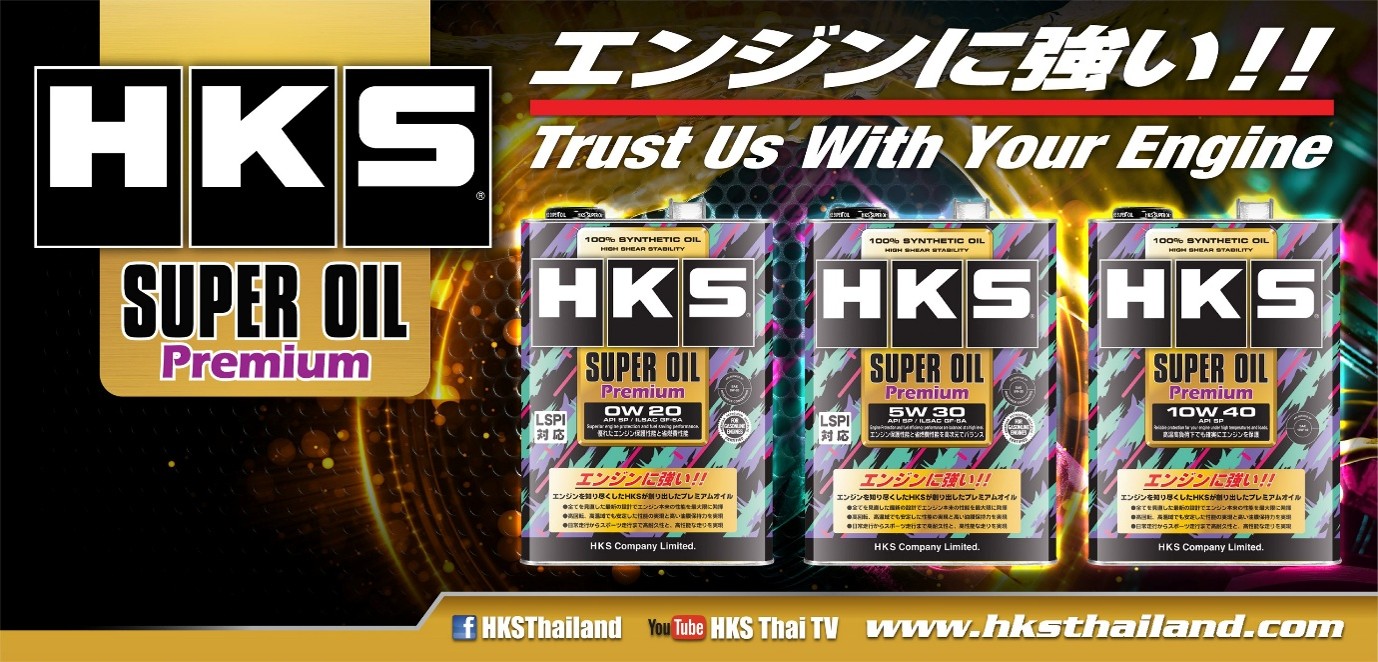
For gasoline engines, the principal viscosity grades of HKS SUPER OIL Premium include:
SAE 0W-20
Designed for engines requiring low-viscosity lubricants, with an emphasis on balancing engine protection and fuel efficiency.
SAE 5W-30
Designed for engines requiring a balance of lubrication characteristics, engine protection, and operating efficiency.
SAE 10W-40
Intended for engines whose manufacturer specifications permit this viscosity grade, providing suitable lubrication characteristics under higher-temperature and higher-load conditions.
According to HKS Japan, all three grades meet the API SP specification.
The SAE 0W-20 and SAE 5W-30 formulations additionally meet ILSAC GF-6A.
The word Premium is the name HKS uses for this product range.
In the company's 2021 catalog, SUPER OIL Premium was positioned within its Standard Grade category, emphasizing a balance between performance and value.
Therefore, the Premium designation should not automatically be interpreted as meaning that the product represents HKS's highest-specification racing engine oil.
What is clear, however, is that SUPER OIL Premium was developed to address the requirements of modern engines while continuing the legacy of a product name with decades of history.
More Than a Product — A Legacy Carried Forward
Consider the journey once again.
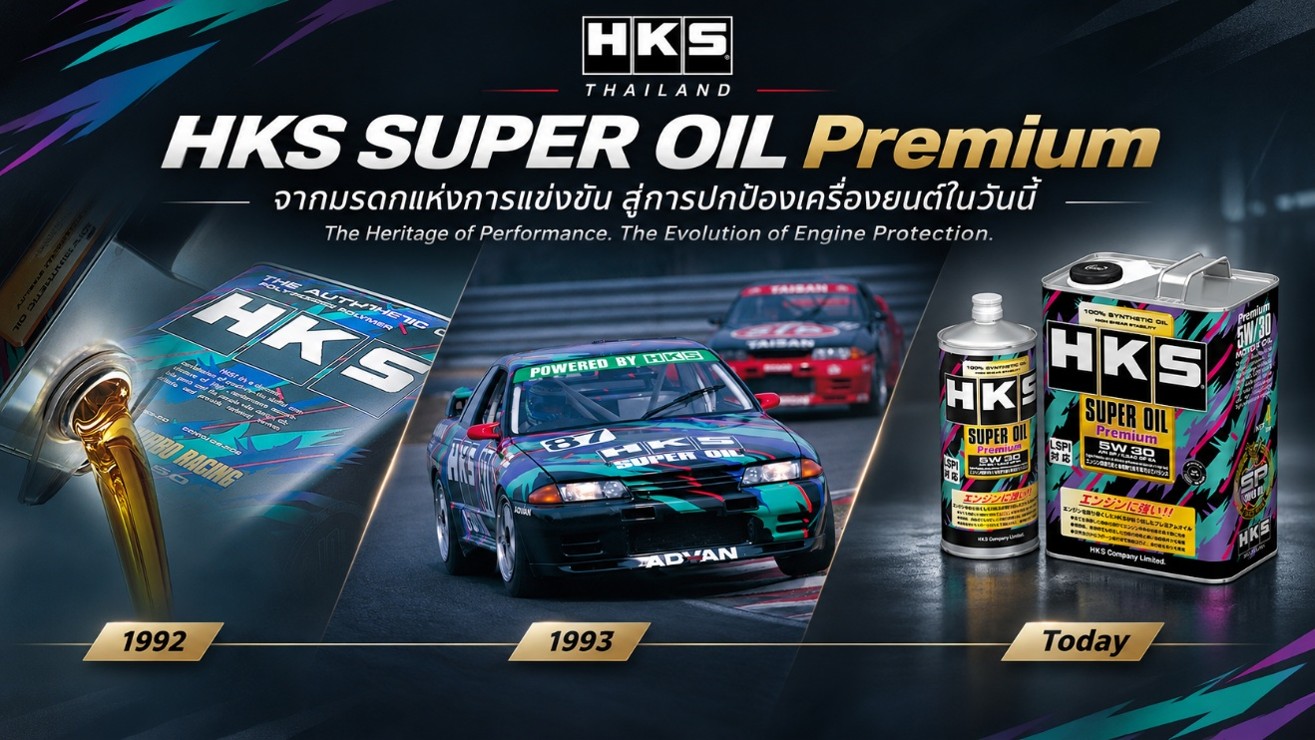
In 1985, HKS introduced its own engine oil, guided by the belief that lubrication is an essential element of engine engineering.
In 1992, the SUPER OIL name became an established part of the HKS brand identity.
In 1993, graphics inspired by engine oil packaging appeared on the Skyline GT-R number 87, the racing machine that secured a memorable Group A victory.
Over the decades that followed, those distinctive colors continued to appear on HKS vehicles and products, while the company's engine oil technology continued evolving to meet the requirements of successive generations of engines.
That journey eventually leads to SUPER OIL Premium, developed to address modern engine oil specifications and contemporary driving requirements.
Of course, a long history does not mean that every engine oil formulation is suitable for every vehicle.
Nor does it mean that using a particular engine oil will automatically increase engine horsepower.
But history does provide something valuable.
It helps explain why HKS has continued investing in the development of engine oil products over so many years.
It also explains why the SUPER OIL name and the colorful graphics on its packaging carry a meaning that extends beyond their appearance.
The next time you see a can of HKS SUPER OIL Premium, take a closer look at its distinctive colors and patterns.
What you are looking at is more than packaging designed to stand out on a store shelf.
It is part of a recognizable identity connected to decades of engine development, motorsport competition, and one of the most memorable racing machines in HKS history.
From an engine oil can of the past, to a legendary race car, and back to a product that today's drivers can choose for their own vehicles.
This is one of the stories behind HKS SUPER OIL Premium.
HKS SUPER OIL Premium
The Heritage of Performance. The Evolution of Engine Protection.
Because We Know Every Horsepower Best.
HKS Thailand
Discover the heritage and product range of HKS SUPER OIL Premium, and explore engine oil options suited to your vehicle's engine specifications and driving requirements.
Note: Engine oil viscosity, specifications, and replacement intervals should always be selected according to the vehicle manufacturer's recommendations and actual operating conditions.